
 English
 中文简体
中文简体 Author: Admin Date: 2026-06-05
Why Are Manufacturers Upgrading Punching Operations Instead of Expanding Production Lines?
Across global metal fabrication, hardware production, and light industrial manufacturing, a clear shift is taking place. Instead of expanding entire production lines, many factories are now focusing on improving the efficiency, accuracy, and traceability of individual punching processes. This change is driven by rising labor costs, tighter quality requirements, and increased demand for consistent output in small-to-medium batch production.
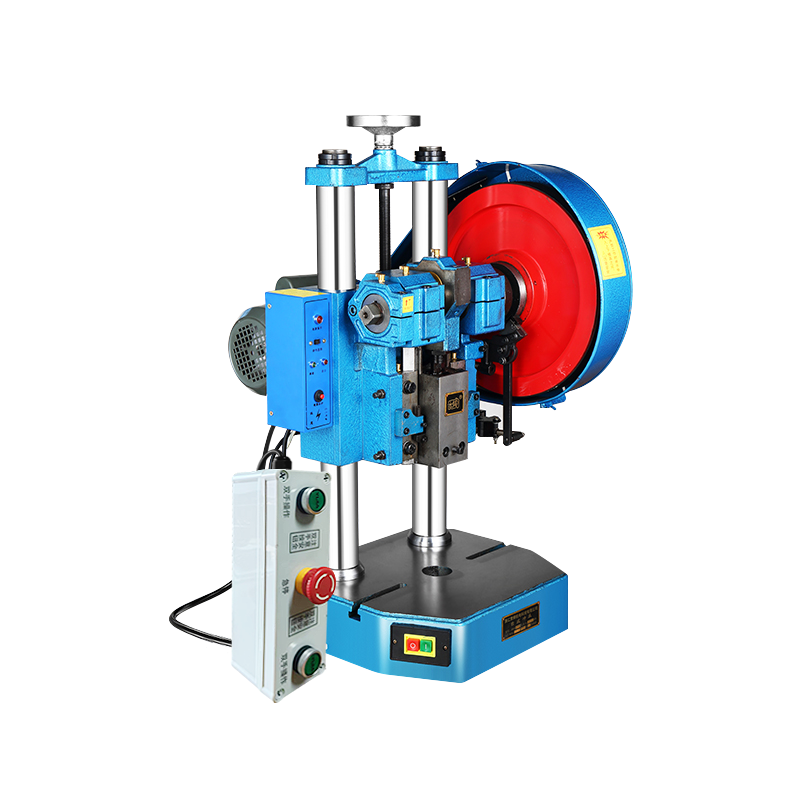
Recent search behavior from overseas engineers and procurement teams shows growing interest in terms such as “production counting punch system for metal stamping,” “manual press accuracy improvement for small factories,” and “low-cost punching quality control solutions.” These reflect a practical need: improving output visibility and consistency without investing in fully automated stamping lines.
Production Traceability Is Becoming a Core Requirement in Small Factories
In modern manufacturing environments, even small workshops are now expected to provide clear production tracking and output documentation. This is especially important for export-oriented factories supplying standardized components.
Common challenges include:
- lack of real-time output tracking
- inconsistent manual record-keeping
- difficulty verifying production efficiency per shift
- limited visibility of operator performance
To address these issues, many facilities are integrating mechanical or semi-digital counting mechanisms into punching systems, improving transparency without complex automation upgrades.
Manual Punching Is Still Widely Used in Flexible Production Environments
Despite the growth of automation, manual punching equipment remains widely used in small-batch production, repair workshops, and custom fabrication shops. Its popularity is driven by flexibility and low setup cost.
Typical use cases include:
- prototype development and sample production
- low-volume customized metal parts
- maintenance and repair operations
- workshop-level fabrication tasks
However, manual systems often lack consistency in output tracking and pressure control, which can affect product quality over time.
Output Counting Is Improving Quality Control in Fabrication Shops
One of the important developments in punching operations is the introduction of counting mechanisms. These systems help operators track production volume more accurately and reduce human error in reporting.
Key improvements include:
- real-time punch count visibility
- reduced manual logging errors
- better shift-based production tracking
- improved consistency in batch output
For factory managers, this allows better planning of production capacity and resource allocation based on actual output data rather than estimates.
Operator Fatigue and Force Consistency Remain Key Issues
Manual punching operations often involve repetitive force application, which can advance to operator fatigue and inconsistent results across long shifts.
Common operational concerns include:
- reduced punching accuracy after prolonged use
- inconsistent force application between operators
- higher risk of material deformation
- decreased efficiency during high-volume tasks
Improving mechanical leverage and stabilizing force application helps reduce these issues while maintaining productivity in manual environments.
Cost Efficiency Is Driving Demand for Semi-Improved Manual Systems
Many small and mid-sized manufacturers are not ready to invest in full automation systems. Instead, they are upgrading existing manual equipment to improve efficiency without significant capital expenditure.
Key procurement considerations include:
- lower investment compared to automated press systems
- compatibility with existing workshop setups
- reduced training requirements for operators
- incremental productivity improvement without system overhaul
This makes upgraded manual systems a practical solution for growing manufacturing businesses.
Precision and Repeatability Are Now Key Purchasing Criteria
Global buyers are increasingly evaluating punching equipment based on repeatability rather than just initial performance. Consistency across multiple production cycles is essential for export-quality components.
Important evaluation factors include:
- stable punching alignment over time
- consistent output under repeated operation
- reduced variation between operators
- reliable mechanical structure under continuous use
These factors directly influence product quality and rejection rates in downstream manufacturing processes.
Manufacturing Adaptability Defines Competitive Advantage
In today’s competitive industrial supply chain, equipment flexibility and adaptability are as important as raw performance. Manufacturers must support different production volumes, material types, and workshop conditions.
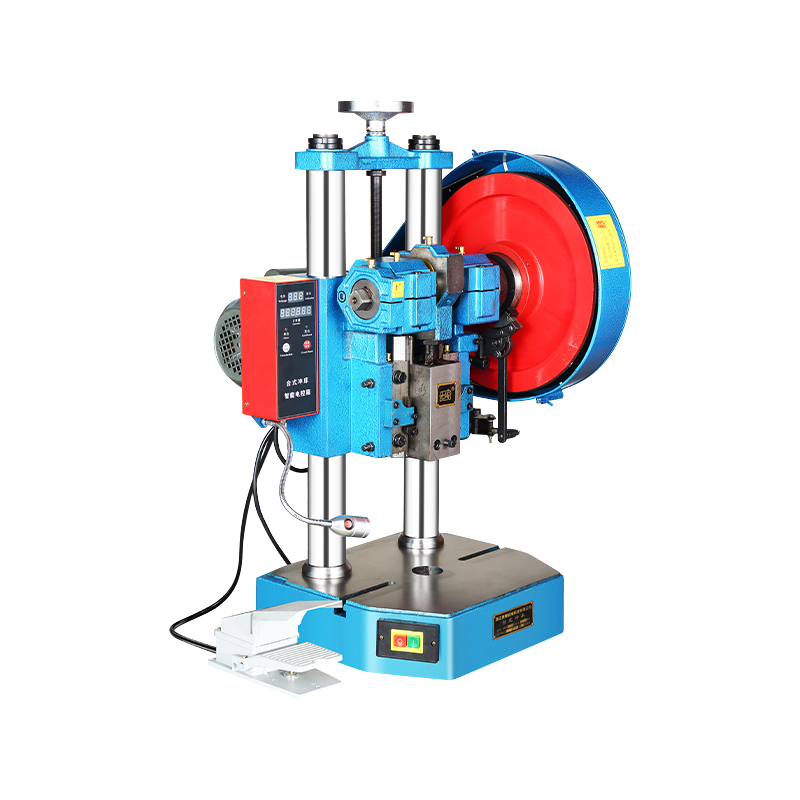
As a result, demand is increasing for improved punching systems such as Counting Punch Press solutions that enhance production visibility, while still maintaining the simplicity and reliability of traditional workshop equipment like the Manual Punch Press used widely in small-scale metal fabrication and maintenance operations.

-
Feedback


Copyright © Zhejiang Gongpin Electromechanical Technology Co., Ltd. All Rights Reserved.
Small Medium Motors Mechanical Equipment Suppliers
