
 English
 中文简体
中文简体 Author: Admin Date: 2026-10-16
Why Should Motor Selection Start With the Load Profile?
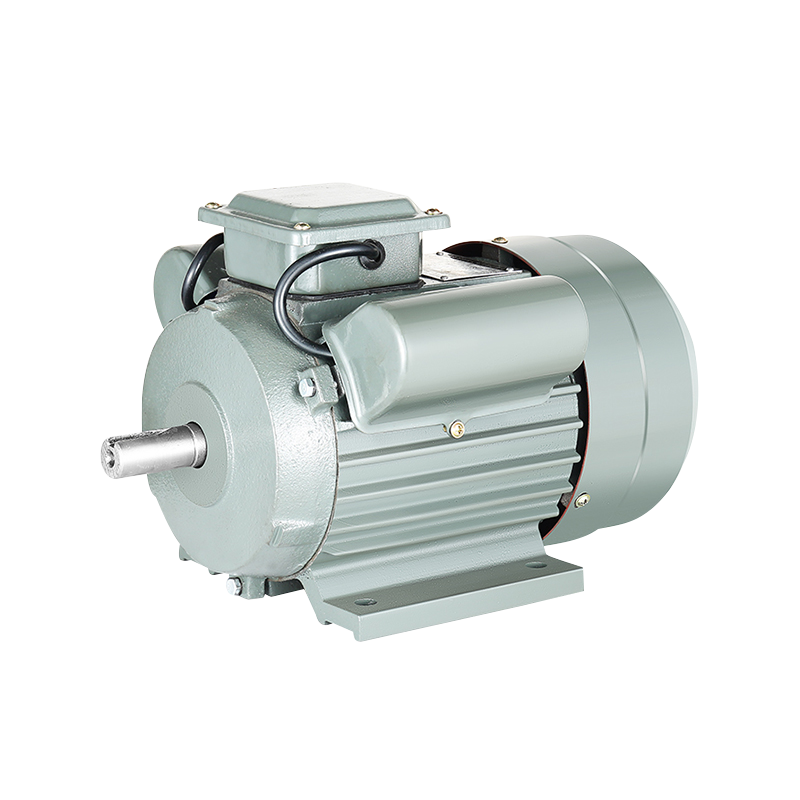
Variable-speed production equipment is becoming increasingly dependent on accurate motor and drive matching. In applications where speed changes with production demand, selecting a motor only from its rated power can overlook important operating conditions. For engineers and procurement teams, a Three-Phase Frequency Controlled Asynchronous Motor should be evaluated according to the actual load profile, speed range, cooling conditions, and control requirements rather than a single nameplate value.
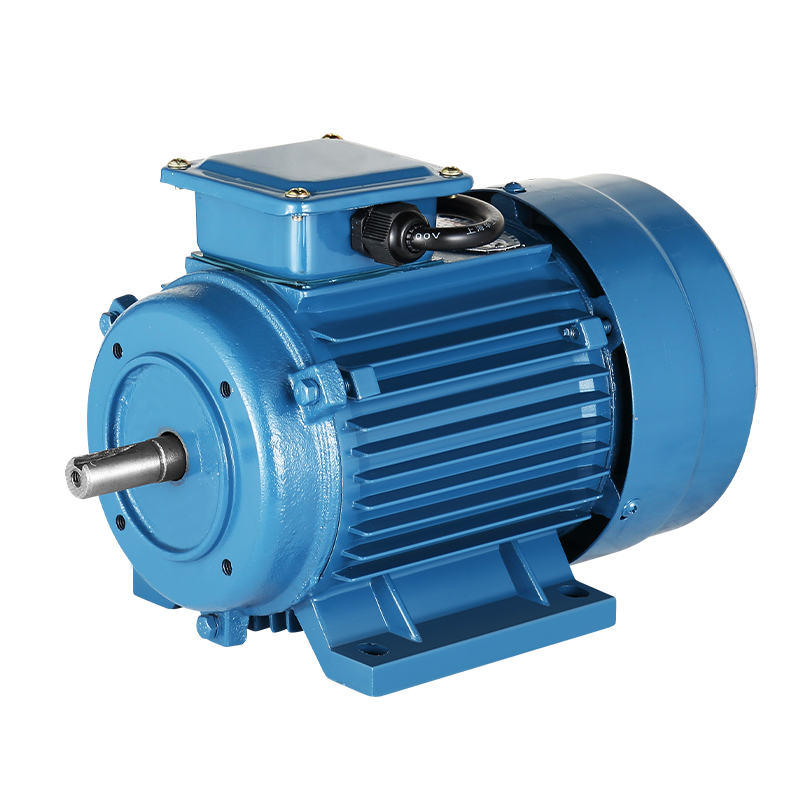
Rated Power Is Only the Starting Point
A motor's rated power describes an important operating condition, but it does not explain how the machine will behave at different speeds and loads. A conveyor may operate with changing material flow, while a fan or pump may spend much of its operating time away from its nominal point.
Before selecting a motor, buyers should understand:
- Normal operating speed
- Required speed range
- Load variation
- Starting conditions
- Continuous or intermittent operation
- Expected torque requirements
These details allow the motor specification to reflect the real application rather than an assumed working point.
Variable Speed Changes the Thermal Picture
When an asynchronous motor operates at reduced speed, its cooling conditions may change depending on the motor's cooling arrangement. This means that a motor intended for variable-frequency operation should be evaluated across its expected operating range rather than only at rated speed.
The application should therefore consider the relationship between speed, load, ambient conditions, and heat dissipation. A manufacturer can use this information to determine whether the proposed motor configuration is appropriate for the required duty.
Torque Requirements Need Careful Attention
Speed control does not automatically mean that the motor will deliver the same torque under every operating condition. Different machines create different torque demands as speed changes.
For procurement teams, it is useful to describe whether the application involves relatively stable torque, changing torque, or a load that increases significantly under particular operating conditions. This helps the manufacturer assess the motor and drive combination more accurately.
A practical specification should therefore include the expected torque behavior instead of stating only the desired RPM.
Motor and Drive Should Be Considered Together
A frequency-controlled motor is part of a larger drive system. The motor, frequency converter, control method, cabling, protection, and driven equipment all influence the final operating result.
IEC 60034-2-3:2024 provides specific test methods for determining losses and efficiency of converter-fed AC motors at different load and speed points. The standard treats the motor as part of a variable-frequency power drive system rather than evaluating efficiency only at one fixed operating condition.
For buyers, this is a useful reminder that motor selection should not be separated completely from drive selection.
Efficiency Depends on How the Motor Is Used
A higher motor efficiency rating does not automatically mean the complete drive system will achieve the same improvement under every operating condition. Actual load, speed, and operating time all influence the energy performance of a motor system.
Current guidance for motor-system efficiency also considers the speed and torque profile of the driven load when evaluating the overall power drive system.
For this reason, buyers should provide actual operating information whenever possible instead of selecting a motor from efficiency data alone.
Manufacturer Review Can Prevent Specification Gaps
From a manufacturing perspective, receiving complete application information early makes technical evaluation much more practical. A supplier can review the requested motor against electrical, mechanical, thermal, and control conditions before production begins.
Useful information includes:
- Supply voltage and frequency
- Rated output and required speed
- Variable-speed operating range
- Load type and torque requirements
- Duty cycle
- Installation environment
- Frequency converter information
This approach also makes it easier to discuss customization when the standard configuration does not fully correspond to the application.
Build the Motor Around the Application
A Three-Phase Frequency Controlled Asynchronous Motor should not be selected simply because its rated power matches the machine's nominal requirement. The real operating profile provides a much stronger basis for technical selection.
For overseas buyers, sharing speed range, load characteristics, duty cycle, cooling conditions, and drive information with the manufacturer can help create a more suitable motor specification. When the motor and control system are considered as one working solution, engineers can make better decisions about performance, thermal behavior, efficiency, and long-term operation.

-
Feedback


Copyright © Zhejiang Gongpin Electromechanical Technology Co., Ltd. All Rights Reserved.
Small Medium Motors Mechanical Equipment Suppliers
