
 English
 中文简体
中文简体 Author: Admin Date: 2026-09-25
Could the Right Fan Motor Improve HVAC Reliability Without Changing the Entire System?
As HVAC equipment becomes more focused on controllable airflow, efficient operation, and flexible system integration, motor selection is becoming a more detailed engineering decision. A Fan Compatible Motor should not only fit the existing mounting structure but also work with the fan curve, control system, operating environment, and required airflow. Recent HVAC guidance continues to emphasize that voltage, phase, RPM, frame size, shaft dimensions, rotation, bearing type, temperature rating, and operating conditions all need to be evaluated together when replacing a fan or blower motor.
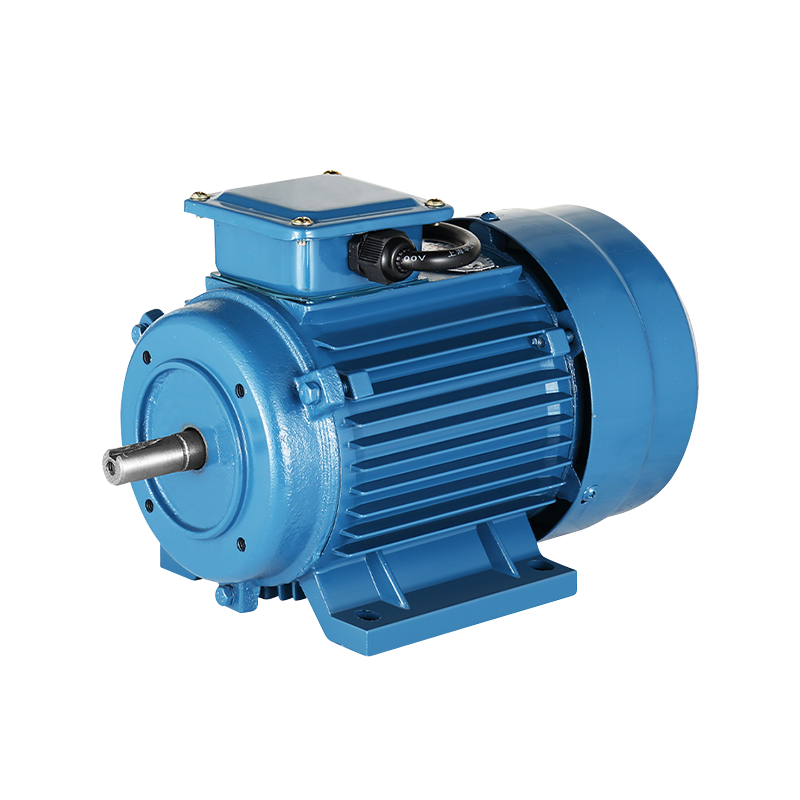
Start With Airflow Instead of the Motor Nameplate
One common sourcing mistake is selecting a replacement according to horsepower alone. The motor is only one part of the air-moving system, and its performance depends on the fan wheel and system resistance.
Before choosing a motor, engineers should establish the actual operating requirements:
- Required airflow and static pressure
- Normal and adjustable operating speed
- Voltage and frequency
- Fan wheel diameter and configuration
- Continuous or intermittent operating duty
- Available mounting and installation space
A motor that matches the original power rating may still produce different airflow if its speed or torque characteristics differ. For replacement projects, checking the actual fan operating point provides a more reliable basis for selection.
Static Pressure Can Change the Motor Load
Airflow resistance is another factor that should not be ignored. Filters, coils, ducts, grilles, and restricted passages all contribute to static pressure. As resistance increases, the fan may require additional torque from the motor to maintain the desired airflow.
This becomes particularly relevant in compact air-handling equipment. A motor that performs correctly under low resistance may behave differently once installed in a system with restrictive filters or ductwork. HVAC engineering resources note that increased static pressure can increase motor loading and affect motor speed, current, and operating temperature.
For OEM development, evaluating the motor together with the actual fan and airflow path can therefore prevent unnecessary oversizing.
Variable-Speed Operation Requires Better Matching
Variable-speed motors are becoming increasingly relevant in HVAC applications because system demand changes throughout operation. ECM technology allows motor speed to be adjusted electronically, helping the fan respond to different airflow requirements and system conditions.
However, variable-speed capability does not remove the need for correct system matching. The controller, motor, fan wheel, and duct system must work together.
For engineers evaluating an ECM replacement, several questions should be answered before production or installation:
- Can the existing controller communicate with the motor?
- Does the available speed range correspond with the required airflow?
- Can the motor operate correctly under the system's static pressure?
- Are the mounting dimensions and shaft configuration compatible?
This makes control compatibility an important part of modern motor sourcing.
Mechanical Dimensions Can Affect Airflow
Physical fit is often treated as a simple installation issue, but it can also influence system performance. Frame size, shaft length, shaft diameter, mounting position, and fan-wheel location can all affect the final assembly.
For example, changing the motor depth may alter the position of a fan blade or blower wheel inside the housing. That change can influence airflow and loading even when the motor's electrical specifications appear suitable.
A properly engineered replacement should therefore consider the complete mechanical interface rather than relying on approximate dimensions.
Thermal Conditions Matter During Long Operation
Fan motors used in HVAC and ventilation equipment may operate for extended periods, making thermal performance an important selection factor. Ambient temperature, enclosure design, airflow around the motor, bearing configuration, and actual load can all influence operating temperature.
A motor designed for a specific air-over application, for instance, depends partly on the surrounding airflow for cooling. If the motor is incorrectly loaded or installed in a restricted environment, thermal conditions may change.
For procurement teams, asking for operating-temperature information and duty requirements before placing an OEM order can help avoid compatibility problems later in the equipment lifecycle.
OEM Manufacturing Can Reduce Selection Risk
Standard catalog motors are useful for many applications, but equipment manufacturers often face requirements that do not correspond to a single standard model. Different fan assemblies may require customized shafts, mounting structures, wiring arrangements, speed ranges, or control configurations.
A manufacturer with engineering and production capabilities can evaluate these parameters together and develop a motor configuration around the customer's equipment. This is particularly useful for HVAC units, ventilation equipment, refrigeration systems, heat pumps, air handlers, and industrial cooling assemblies.
The goal is not simply to make a motor fit. It is to create a motor-and-fan combination that performs consistently within the intended application.
Build Compatibility Into the Design From the Beginning
For OEM buyers and engineering teams, motor selection is effective when it begins with the complete system rather than the motor catalog. Airflow, static pressure, speed, controls, mechanical dimensions, thermal conditions, and duty cycle should all be considered before production.
A well-matched Fan Compatible Motor can support more stable airflow, simplify equipment integration, and reduce problems during replacement or commissioning. As HVAC systems continue moving toward variable-speed and electronically controlled operation, application-based motor selection will become increasingly important for manufacturers seeking reliable and adaptable fan solutions.

-
Feedback


Copyright © Zhejiang Gongpin Electromechanical Technology Co., Ltd. All Rights Reserved.
Small Medium Motors Mechanical Equipment Suppliers
